



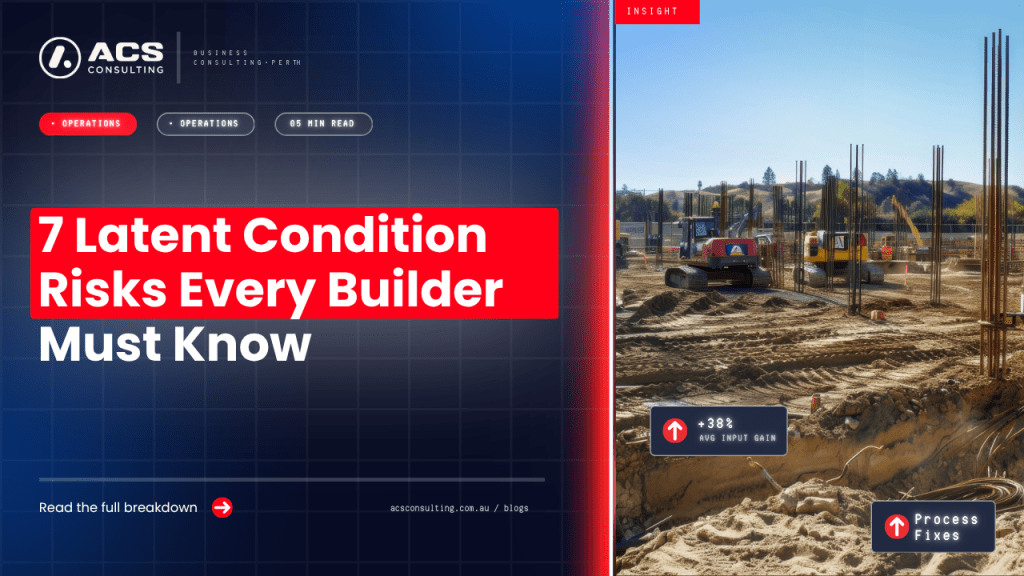
You can’t see what’s under the ground until you dig — and in construction, what you find there can make or break a project’s budget. Contaminated soil, rock, old foundations, buried services, unexpected water: these are latent conditions, the hidden site conditions that couldn’t reasonably be foreseen, and they’re one of the most common and costly sources of delay, blow-outs and disputes in construction. Understanding how latent conditions work, and who carries the risk, is essential for any builder or contractor who wants to protect their margins.
This guide explains what latent conditions are, why they matter, how risk is allocated, and how to protect your business — written in plain terms for Australian builders, subcontractors and contractors. It’s general information, not legal advice, so check your contract and seek advice on specific situations.
WHAT ARE LATENT CONDITIONS?
Latent conditions are physical conditions on or near a site that differ materially from what could reasonably have been anticipated, and that an experienced contractor could not have foreseen through a reasonable site inspection and review of available information. In plain terms, they’re the nasty surprises hidden in the ground or the existing structure.
Common examples make it concrete: contaminated soil such as asbestos, unexpected rock or ground conditions, sinkholes or cavities, undocumented underground services, and concealed features in existing buildings. Crucially, latent conditions are physical — commercial or financial surprises don’t count; it’s hidden site features that qualify.
WHY THEY MATTER SO MUCH
Latent conditions matter because they’re a frequent and serious cause of trouble on projects — driving cost overruns, delays, disruption, and disputes over who’s responsible. When something unexpected is found underground, the work to deal with it costs money and time nobody planned for, and the question of who pays can quickly become contentious.
The financial stakes can be enormous. Major projects have suffered years of delay from latent conditions — contaminated soil, sinkholes and fault lines have derailed significant infrastructure builds. For a smaller contractor, a single serious latent condition can turn a profitable job into a loss if the risk sits with the wrong party.
WHO CARRIES THE RISK?
The critical question with latent conditions is always who bears the risk, and the answer comes down to the contract. Australian standard-form contracts such as AS 4000 contain specific latent condition clauses that deal with notification and potential adjustments to time and cost, but contracts can also shift the risk onto the contractor entirely.
This is why reading the contract matters enormously. Whether you’re entitled to more time and money when a latent condition appears, or whether you’ve agreed to carry that risk yourself, depends on exactly how your contract defines and allocates latent conditions — so understanding those clauses before you sign is essential.
THE “REASONABLY FORESEEABLE” TEST
At the heart of most latent conditions disputes is a single question: could the condition have been reasonably foreseen? This is what separates a genuine latent condition, which may entitle you to relief, from something you should have anticipated and priced for, which you’re expected to bear. The test usually turns on what an experienced contractor could reasonably have identified through proper site investigation and by reviewing the information available at tender — including any geotechnical reports, site history and disclosures in the tender documents. This is why site investigation and the tender information matter so much: the more that could reasonably have been discovered beforehand, the less likely a condition qualifies as truly latent. It’s also why disputes get technical, hinging on what was disclosed, what investigation was done, and what a competent contractor should have anticipated. Understanding this test — and doing genuine due diligence at tender — is central to both managing latent conditions and defending your entitlement when one appears.
HOW TO PROTECT YOUR BUSINESS
1. Read the latent conditions clause
Understand exactly how your contract defines latent conditions and allocates the risk before signing. This clause can make or break your exposure.
2. Do genuine site investigation
Investigate the site properly and review all available information at tender. Good due diligence both reduces surprises and protects your entitlement.
3. Price and allow for the unknown
Use provisional sums, contingencies and clear exclusions to deal with uncertainty. Pricing for risk you’re carrying is far better than absorbing it later.
4. Notify promptly and document
When a latent condition appears, give notice as the contract requires and record everything. Strict notice and evidence are essential to any claim.
5. Get advice on the tricky ones
Seek legal or commercial advice on significant latent conditions and disputes. Given the stakes, expert input on entitlement is worth it.
NOTICE AND RECORDS: THE KEY TO ENTITLEMENT
Just as with delay claims, entitlement for latent conditions usually lives or dies on notice and documentation. Contracts typically impose strict requirements to notify a latent condition within a set time and to meet evidentiary thresholds, and a contractor who discovers a genuine latent condition but fails to follow the notice process can lose their entitlement to the extra time and cost. When something unexpected is found, the disciplined response is to stop, notify in the form and timeframe the contract requires, and document thoroughly — photographs, records of the condition, its effect on the works, and the additional cost and delay it causes. Recent security-of-payment developments in some jurisdictions have also affected how contested claims, including for latent conditions, can be pursued, which makes getting the process right even more important. The contractor who handles the paperwork properly protects their entitlement; the one who just gets on with fixing it, meaning well, may end up absorbing the cost.
COMMON LATENT CONDITIONS MISTAKES TO AVOID
- Not reading the clause. Signing without understanding how latent conditions risk is allocated can leave you dangerously exposed.
- Skimping on site investigation. Poor due diligence increases surprises and weakens your claim that a condition was unforeseeable.
- Missing notice requirements. Failing to notify promptly and properly can forfeit an otherwise valid entitlement.
- Not pricing carried risk. If you’ve agreed to bear latent conditions risk, failing to price for it can turn a job into a loss.
Managing the commercial and risk side of construction is core ACS Consulting territory. The Construction Estimation & Cost Consultancy service helps you understand latent conditions risk, price for uncertainty, and manage entitlements, while the Operations & Process Improvement service builds the notice and record-keeping discipline that protects claims, and the Strategy & Business Planning service treats project risk as part of running a resilient business. The free Perth SME Operational Audit Checklist helps you tighten your commercial processes. For authoritative guidance, Master Builders Australia, the Australian Government’s contracts and tenders resources, and Business Queensland on building payments are useful references. As this isn’t legal advice, check your contract and seek advice on specific latent conditions.
FREQUENTLY ASKED QUESTIONS
What are latent conditions?
Latent conditions are physical conditions on or near a site that differ materially from what could reasonably have been anticipated and that an experienced contractor couldn’t have foreseen through reasonable investigation. Examples include contaminated soil, unexpected rock, sinkholes, and undocumented underground services — hidden physical features, not commercial surprises.
Why do latent conditions matter?
Because they’re a frequent, serious cause of cost overruns, delays and disputes. Dealing with an unexpected underground condition costs unplanned time and money, and the question of who pays can become contentious. A single serious latent condition can turn a profitable job into a loss if the risk sits with the wrong party.
Who bears the risk of latent conditions?
It depends on the contract. Australian standard-form contracts like AS 4000 include latent condition clauses dealing with notice and adjustments to time and cost, but contracts can also shift the risk onto the contractor entirely. Reading exactly how your contract defines and allocates latent conditions before signing is essential.
How do I protect my entitlement when a latent condition appears?
Give notice in the form and within the timeframe your contract requires, and document thoroughly — the condition, its effect on the works, and the added cost and delay. Strict notice and evidence are usually essential to a claim, so a contractor who skips the process risks absorbing the cost themselves.
CONCLUSION
Latent conditions are the hidden site surprises that can blow out budgets and spark disputes, and managing them comes down to understanding the contract and following the process. Read the latent conditions clause, do genuine site investigation, price for carried risk, notify promptly and document, and get advice on the significant ones.
Because entitlement hinges on whether a condition was reasonably foreseeable and on strict notice, the disciplined contractor who does their due diligence and handles the paperwork protects their margins when latent conditions strike. As this isn’t legal advice, check your contract and seek advice on specifics.
Need expert guidance for your business?
ACS Consulting
Website: acsconsulting.com.au
Email: zoey@acsconsulting.com.au
Phone: 0452 665 021
Contact ACS Consulting today to discuss your business goals and discover practical solutions that drive measurable results.